
Logistics
Logistics
Logistics
Customer Experience
Customer Experience
Customer Experience
Account Management
Account Management
Account Management
Creating Hermes’ Account Management Experience
Creating Hermes’ Account Management Experience
Creating Hermes’ Account Management Experience
Creating Hermes’ Account Management Experience
Building a unified mobile hub for deliveries and account details.
Building a unified mobile hub for deliveries and account details.
Building a unified mobile hub for deliveries and account details.
Role
Product Designer
Role
Product Designer
Role
Product Designer
Role
Product Designer
Team
Developer, Data Analyst,
Product Owner, Copywriter
Team
Developer, Data Analyst,
Product Owner, Copywriter
Team
Developer, Data Analyst,
Product Owner, Copywriter
Team
Developer, Data Analyst,
Product Owner, Copywriter
Responsibilities
UX/UI Design, Usability Testing
User Interviews, Discovery Workshop
Responsibilities
UX/UI Design, Usability Testing
User Interviews, Discovery Workshop
Responsibilities
UX/UI Design, Usability Testing
User Interviews, Discovery Workshop
Responsibilities
UX/UI Design, Usability Testing
User Interviews, Discovery Workshop
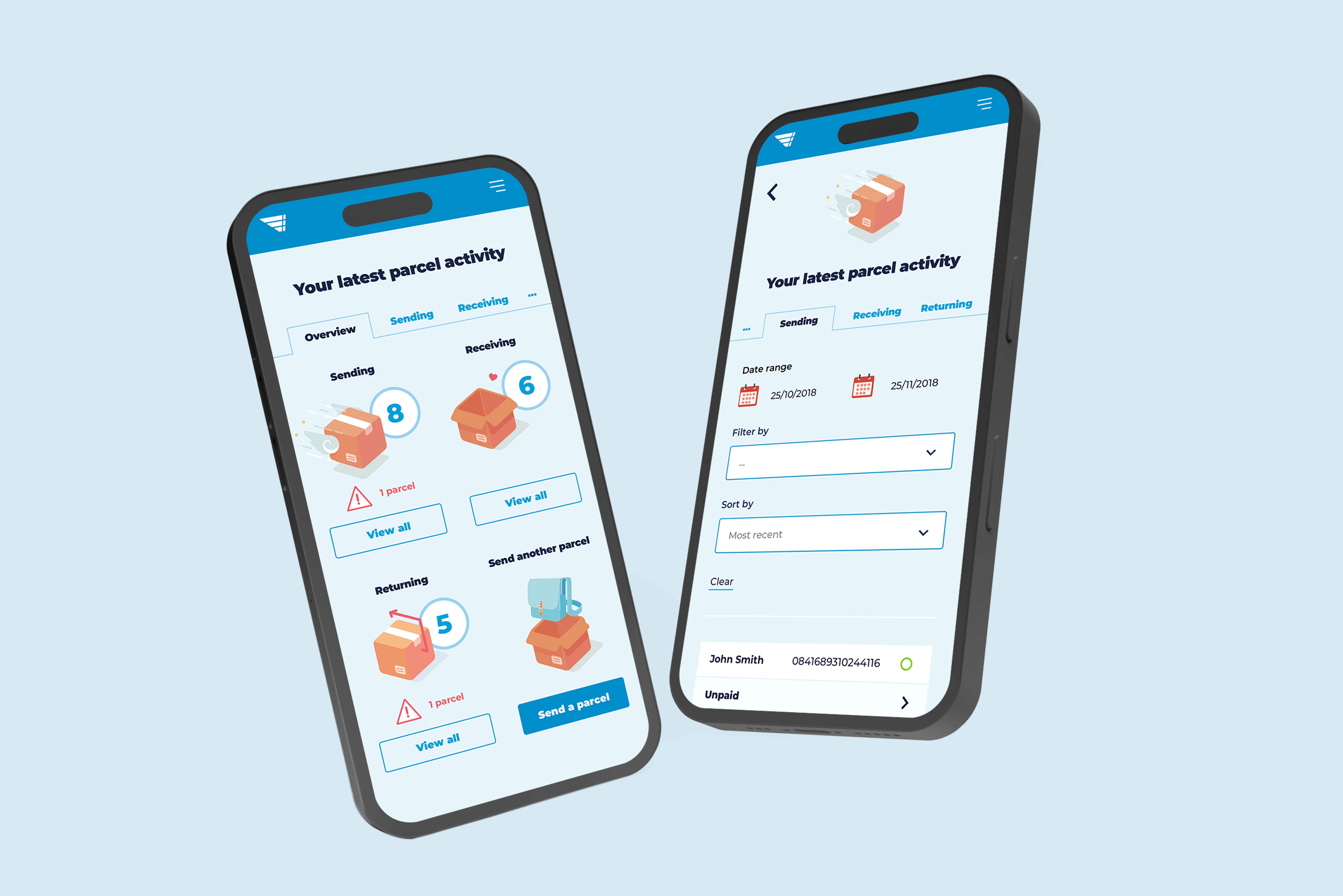
Parcel-tracking mobile UI with illustrated stats and simple navigation.
Parcel-tracking mobile UI with illustrated stats and simple navigation.
Parcel-tracking mobile UI with illustrated stats and simple navigation.
Context & Challenge
Hermes’ customer tools were developed independently, thus leaving delivery tracking and personal information scattered across their global site. Customers expected "My Account" to handle both situations, but the system didn’t support them, causing mistrust, and unnecessary support contact interaction.
The challenge was to design a unified, mobile-first account management hub within the global site, requiring cross-functional alignment and strategic trade-offs within a legacy system.
Context & Challenge
Hermes’ customer tools were developed independently, thus leaving delivery tracking and personal information scattered across their global site. Customers expected "My Account" to handle both situations, but the system didn’t support them, causing mistrust, and unnecessary support contact interaction.
The challenge was to design a unified, mobile-first account management hub within the global site, requiring cross-functional alignment and strategic trade-offs within a legacy system.
Context & Challenge
Hermes’ customer tools were developed independently, thus leaving delivery tracking and personal information scattered across their global site. Customers expected "My Account" to handle both situations, but the system didn’t support them, causing mistrust, and unnecessary support contact interaction.
The challenge was to design a unified, mobile-first account management hub within the global site, requiring cross-functional alignment and strategic trade-offs within a legacy system.
Context & Challenge
Hermes’ customer tools were developed independently, thus leaving delivery tracking and personal information scattered across their global site. Customers expected "My Account" to handle both situations, but the system didn’t support them, causing mistrust, and unnecessary support contact interaction.
The challenge was to design a unified, mobile-first account management hub within the global site, requiring cross-functional alignment and strategic trade-offs within a legacy system.
Context & Challenge
Hermes’ customer tools were developed in independently thus leaving delivery tracking and personal data management scattered across disconnected pages on their global site. Customers expected "My Account" to handle both situations, but the system didn’t support it thus causing friction, mistrust, and unnecessary support contact interaction.
The challenge was to design a unified, mobile-first account management hub within the global site, requiring cross-functional alignment, and strategic trade-offs within a legacy system.
Key Impact
📉 21% fewer support queries
✅ 32% increase in task completions
⚡ 38% faster mobile task competition
Key Impact
📉 21% fewer support queries
✅ 32% increase in task completions
⚡ 38% faster mobile task competition
Key Impact
📉 21% fewer support queries
✅ 32% increase in task completions
⚡ 38% faster mobile task competition
Key Impact
📉 21% fewer support queries
✅ 32% increase in task completions
⚡ 38% faster mobile task competition
Key Impact
📉 21% fewer support queries
✅ 32% increase in task completions
⚡ 38% faster mobile task competition

Research & Discovery
As the brief was ambiguous, I ran user surveys and interviews alongside the product owner whilst dissecting existing user research. I then led a stakeholder discovery workshop to align on the problem space.
Key insights from discovery phase:
Users naturally expect all information to be in one area.
Delivery statuses didn’t make sense to users.
Address and contact info were difficult to find.
Mobile interactions required precision and scrolling.
Tone felt vague during delivery updates.
Research & Discovery
As the brief was ambiguous, I ran user surveys and interviews alongside the product owner whilst dissecting existing user research. I then led a stakeholder discovery workshop to align on the problem space.
Key insights from discovery phase:
Users naturally expect all information to be in one area.
Delivery statuses didn’t make sense to users.
Address and contact info were difficult to find.
Mobile interactions required precision and scrolling.
Tone felt vague during delivery updates.
Research & Discovery
As the brief was ambiguous, I ran user surveys and interviews alongside the product owner whilst dissecting existing user research to help contextualise the situation. I then led a stakeholder discovery workshop to surface recurring themes and align on the problem space.
Key insights from discovery phase:
Users expect information to sit in one area.
Internal delivery statuses didn’t align with users.
Address and contact info were difficult to find.
Mobile interactions required precision
Tone felt vague during delivery updates.
Research & Discovery
As the brief was ambiguous, I ran user surveys and interviews alongside the product owner whilst dissecting existing user research. I then led a stakeholder discovery workshop to align on the problem space.
Key insights from discovery phase:
Users naturally expect all information to be in one area.
Delivery statuses didn’t make sense to users.
Address and contact info were difficult to find.
Mobile interactions required precision and scrolling.
Tone felt vague during delivery updates.
Research & Discovery
As the brief was ambiguous, I ran user surveys and interviews alongside the product owner whilst dissecting existing user research to help contextualise the situation. I then led a stakeholder discovery workshop to surface recurring themes and align on the problem space.
Key insights from discovery phase:
Users expect information to sit in one area.
Delivery statuses didn’t align with users.
Address and contact info were difficult to find.
Mobile interactions required precision
Tone felt vague during delivery updates.
These findings made it clear I needed to:
Build a unified account management hub.
Simplify delivery status into a step-based model.
Reduce friction on mobile.
These findings made it clear we needed to:
Build a unified account hub.
Simplify delivery status into a step-based model.
Reduce friction significantly on mobile.
These findings made it clear we needed to:
Build a unified account hub.
Simplify delivery status.
Reduce friction on mobile.
These findings made it clear I needed to:
Build a unified account management hub.
Simplify delivery status into a step-based model.
Reduce friction on mobile.
These findings made it clear
we needed to:
Build a unified account hub.
Simplify delivery status.
Reduce friction significantly on mobile.
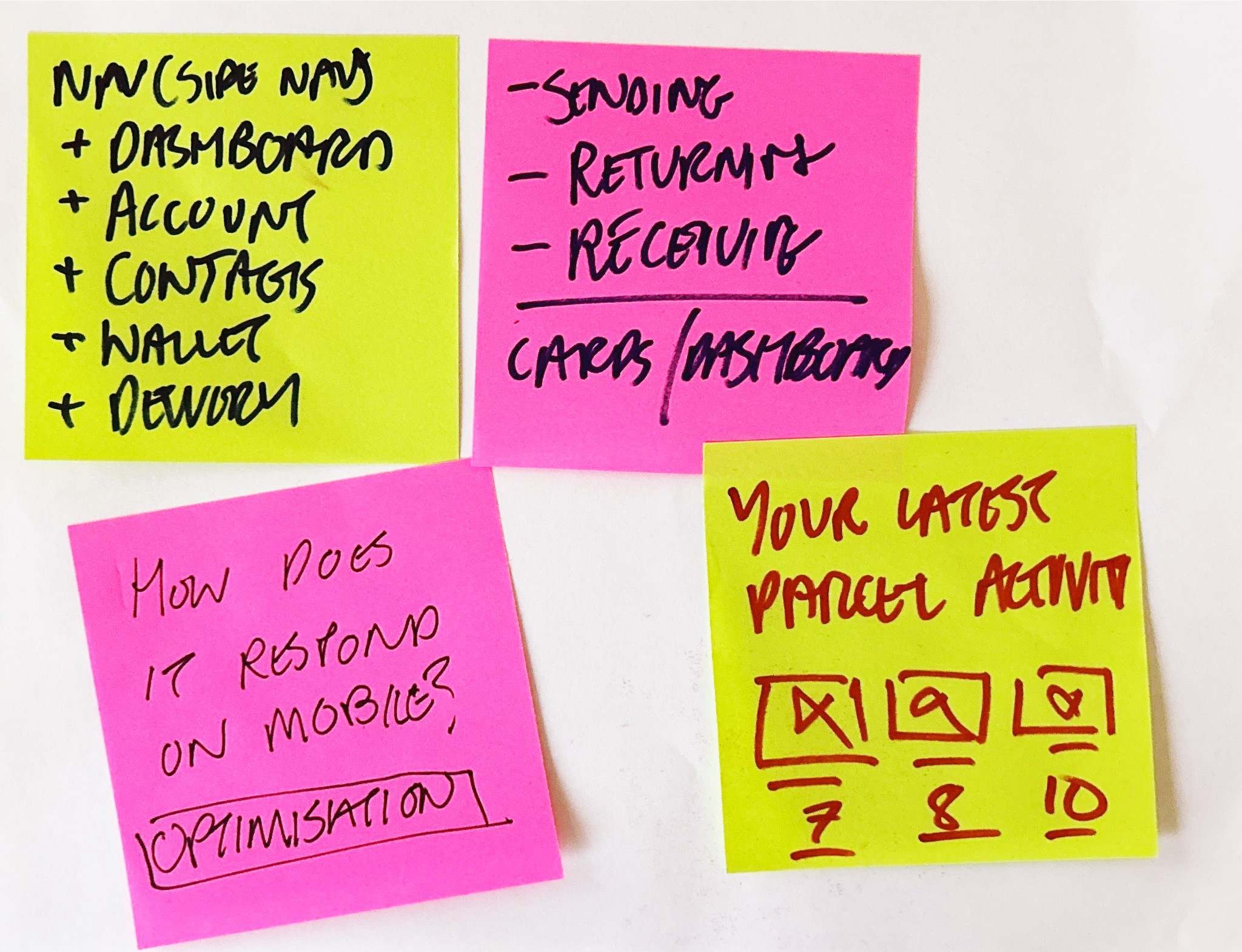
Workshop notes and early wireframes defining navigation, parcel flows, and mobile behaviour.
Workshop notes and early wireframes defining navigation, parcel flows, and mobile behaviour.
Workshop notes and early wireframes defining navigation, parcel flows, and mobile behaviour.
Workshop notes and early wireframes defining navigation, parcel flows, and mobile behaviour.
Defining The Problem
To provide focus; I defined a problem statement: customers expected “My Account” to be the single source of truth for managing deliveries and personal info, but their tools are scattered across the site, creating confusion and mistrust.
I defined the following success criteria:
Reduce support contacts about delivery status.
Increase task completion rates, such as parcel tracking.
Significantly faster and easier to complete mobile tasks.
Defining The Problem
To provide focus; I defined a problem statement: customers expected “My Account” to be the single source of truth for managing deliveries and personal info, but their tools are scattered across the site, creating confusion and mistrust.
I defined the following success criteria:
Reduce support contacts about delivery status
Increase task completion rates, such as parcel tracking.
Significantly faster and easier to complete mobile tasks.
Defining The Problem
To provide focus; I defined a problem statement: customers expected “My Account” to be the single source of truth for managing deliveries and personal info, but their tools are scattered across the site, creating confusion and mistrust.
I defined the following success criteria:
Reduce support contacts about delivery status.
Increase task completion rates, such as tracking.
Significantly faster mobile tasks.
Defining The Problem
To provide focus; I defined a problem statement: customers expected “My Account” to be the single source of truth for managing deliveries and personal info, but their tools are scattered across the site, creating confusion and mistrust.
I defined the following success criteria:
Reduce support contacts about delivery status.
Increase task completion rates, such as parcel tracking.
Significantly faster and easier to complete mobile tasks.
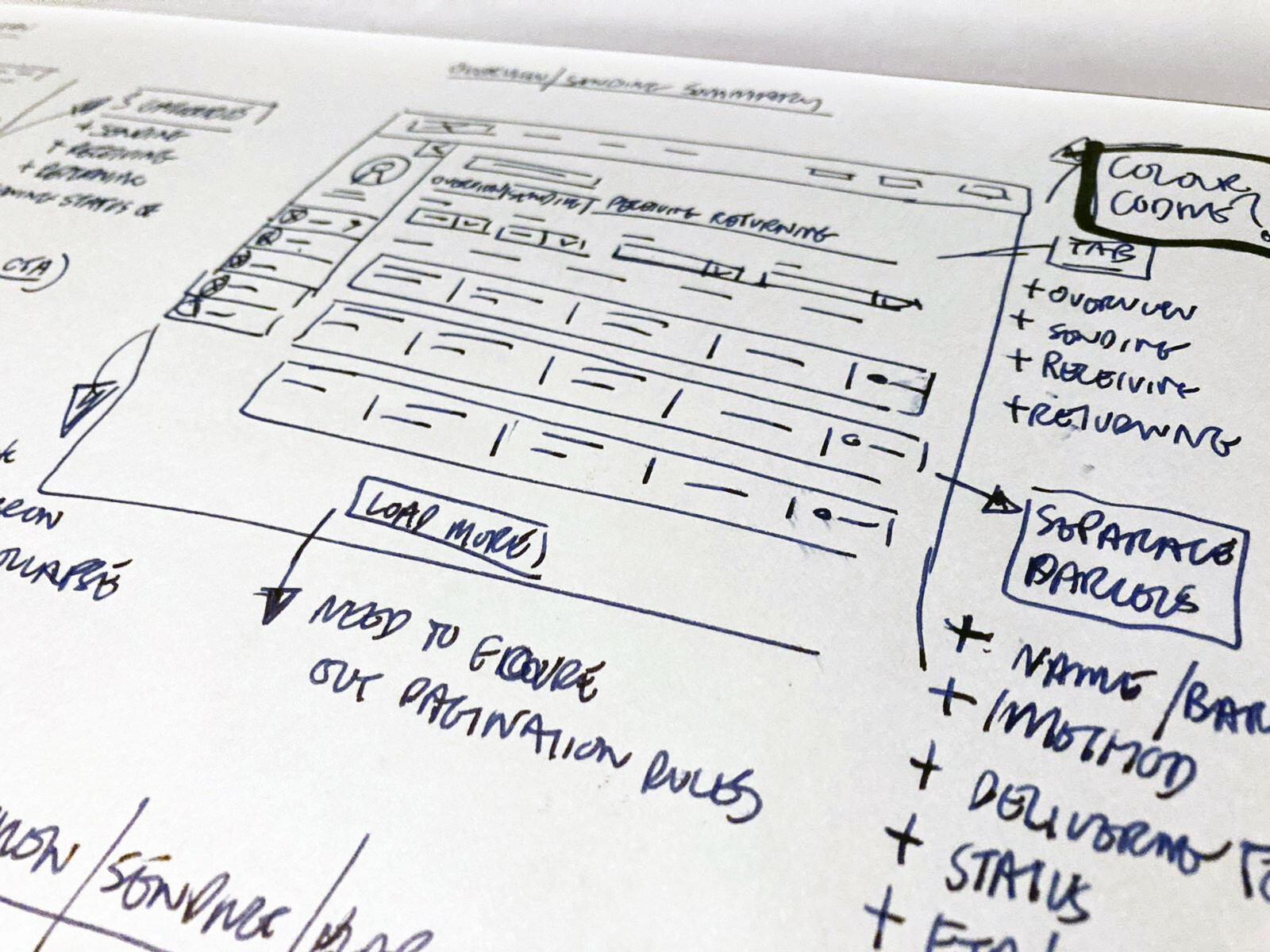
Workshop notes and early wireframes defining navigation, parcel flows, and mobile behaviour.
Workshop notes and early wireframes defining navigation, parcel flows, and mobile behaviour.
Workshop notes and early wireframes defining navigation, parcel flows, and mobile behaviour.
Workshop notes and early wireframes defining navigation, parcel flows, and mobile behaviour.
Design Principles
Clarity
Create a unified account area that shows personal details, saved addresses, notification preferences, and delivery updates. Simplify navigation around user goals rather than internal organisational structures.
Empathy
Rewrite messaging to acknowledge uncertainty, provide reassurance, and explain what actions are possible. Reduce cognitive load during issues.
Efficiency
Fewer clicks on mobile, removing shortened mobile flows by cutting steps, reducing fields, and restructuring UI for thumb reach and scannability.
Design Principles
Clarity
Create a unified account area that shows personal details, saved addresses, notification preferences, and delivery updates. Simplify navigation around user goals rather than internal organisational structures.
Empathy
Rewrite messaging to acknowledge uncertainty, provide reassurance, and explain what actions are possible. Reduce cognitive load during issues.
Efficiency
Fewer clicks on mobile, removing shortened mobile flows by cutting steps, reducing fields, and restructuring UI for thumb reach and scannability.
Design Principles
Clarity
Create a unified account area that shows personal details, saved addresses, notification preferences, and delivery updates. Simplify navigation around user goals rather than internal organisational structures.
Empathy
Rewrite messaging to acknowledge uncertainty, provide reassurance, and explain what actions are possible. Reduce cognitive load during issues.
Efficiency
Fewer clicks on mobile, removing shortened mobile flows by cutting steps, reducing fields, and restructuring UI for thumb reach and scannability.
Design Principles
Clarity
Create a unified account area that shows personal details, saved addresses, notification preferences, and delivery updates. Simplify navigation around user goals rather than internal organisational structures.
Empathy
Rewrite messaging to acknowledge uncertainty, provide reassurance, and explain what actions are possible. Reduce cognitive load during issues.
Efficiency
Fewer clicks on mobile, removing shortened mobile flows by cutting steps, reducing fields, and restructuring UI for thumb reach and scannability.
Design Principles
Clarity
Create a unified account area that shows personal details, saved addresses, notification preferences, and delivery updates. Simplify navigation around user goals rather than internal organisational structures.
Empathy
Rewrite messaging to acknowledge uncertainty, provide reassurance, and explain what actions are possible. Reduce cognitive load during issues.
Efficiency
Fewer clicks on mobile, removing shortened mobile flows by cutting steps, reducing fields, and restructuring UI for thumb reach and scannability.
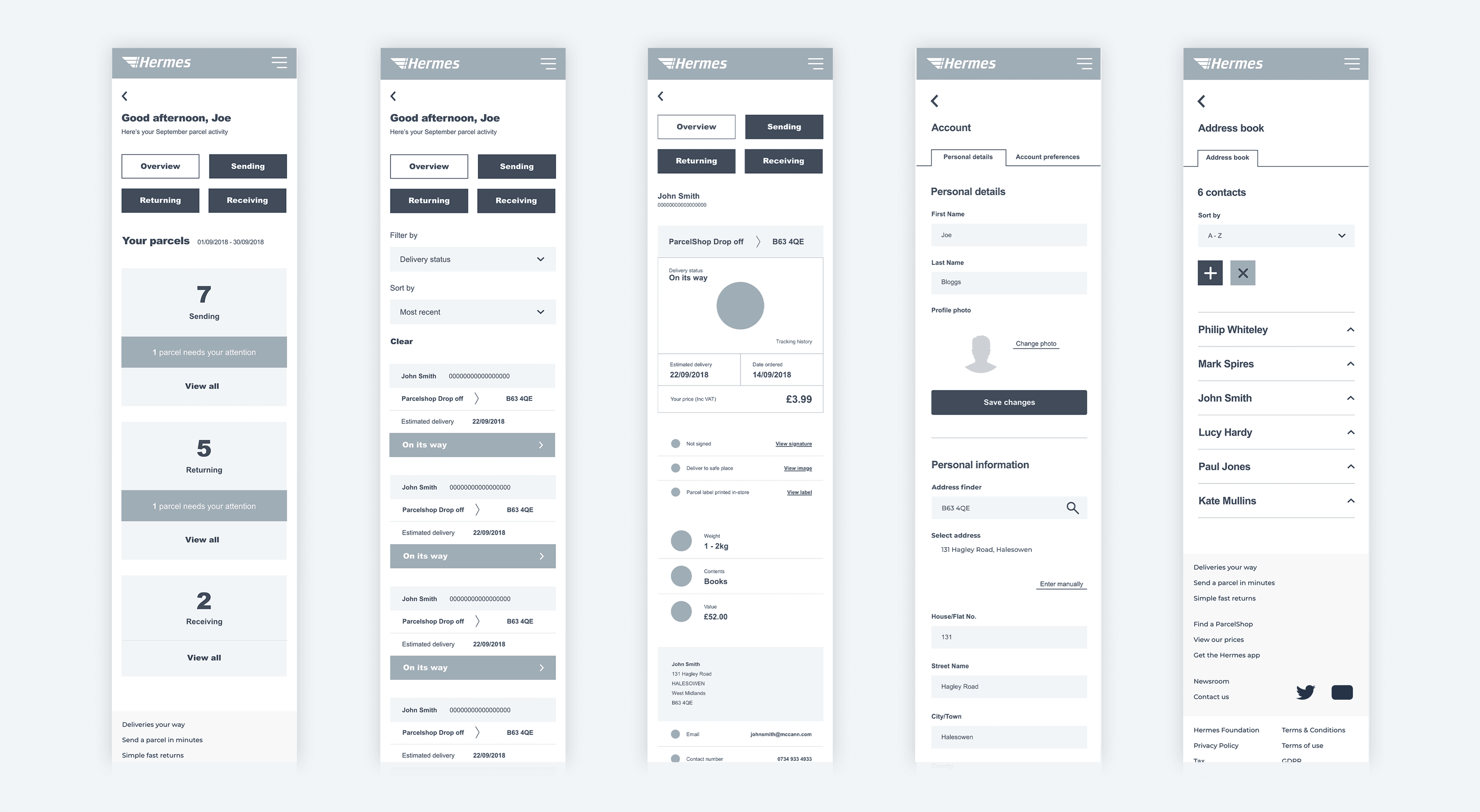
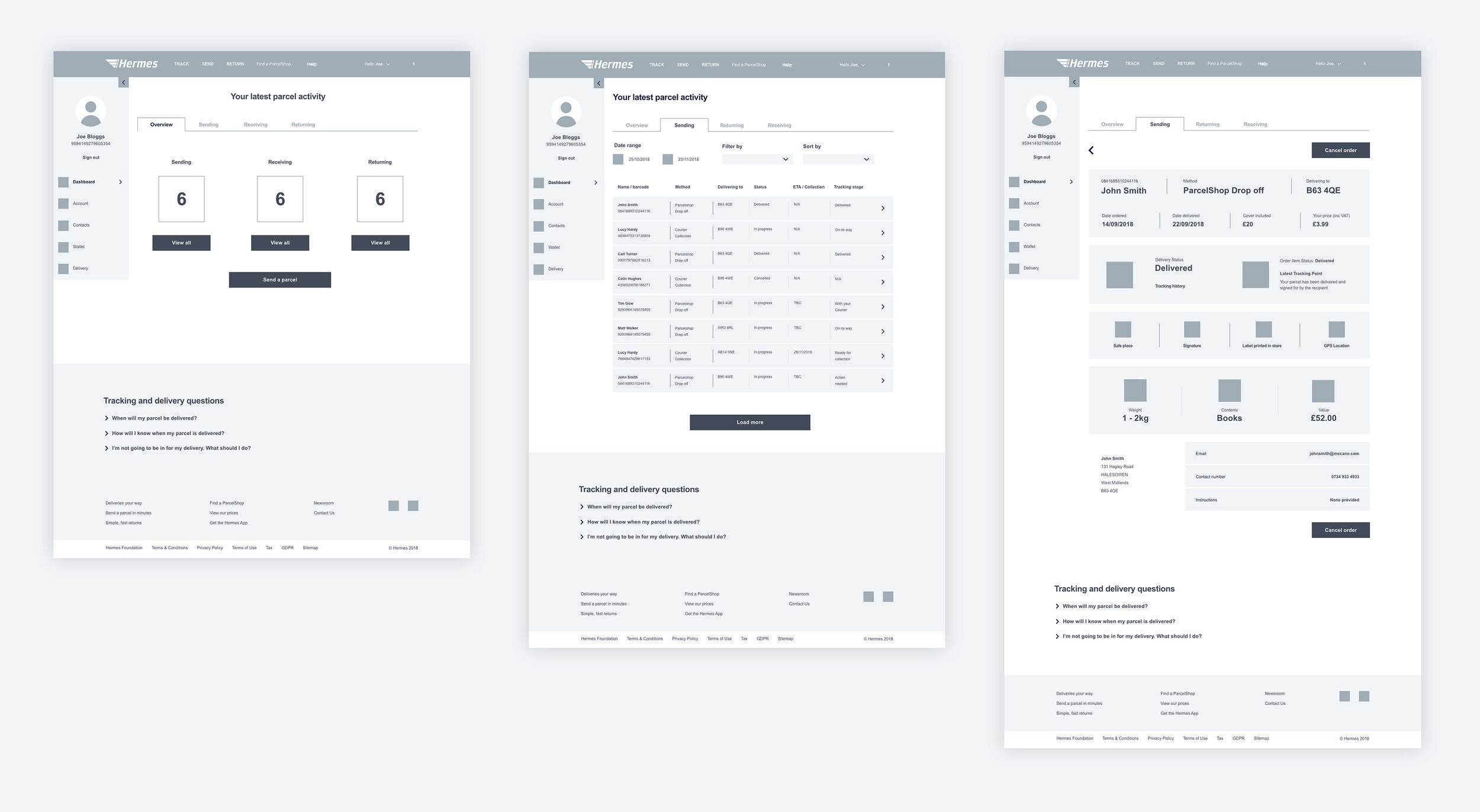
Turning early sketches into low-fi Sketch wireframes for rapid prototyping.
Turning early sketches into low-fi Sketch wireframes for rapid prototyping.
Turning early sketches into low-fi Sketch wireframes for rapid prototyping.
Turning early sketches into low-fi Sketch wireframes for rapid prototyping.
The Solution
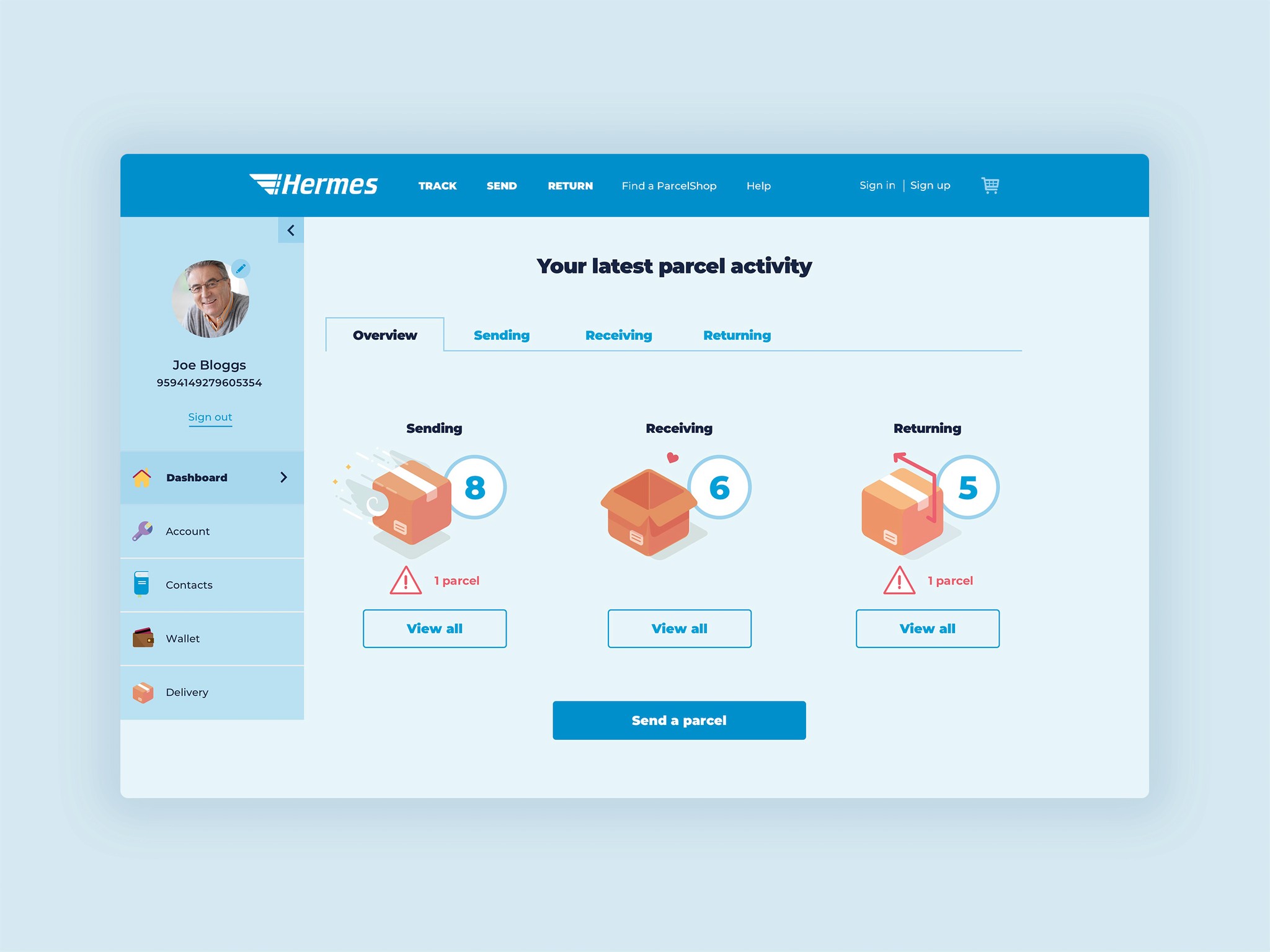
To give users a single source of truth, I designed a unified account hub bringing together delivery tracking, personal details, addresses, contacts, payment tools, and preferences. The hub is organised into five subsections based on the key task groups that emerged from the discovery phase:
Dashboard - Overview and quick actions
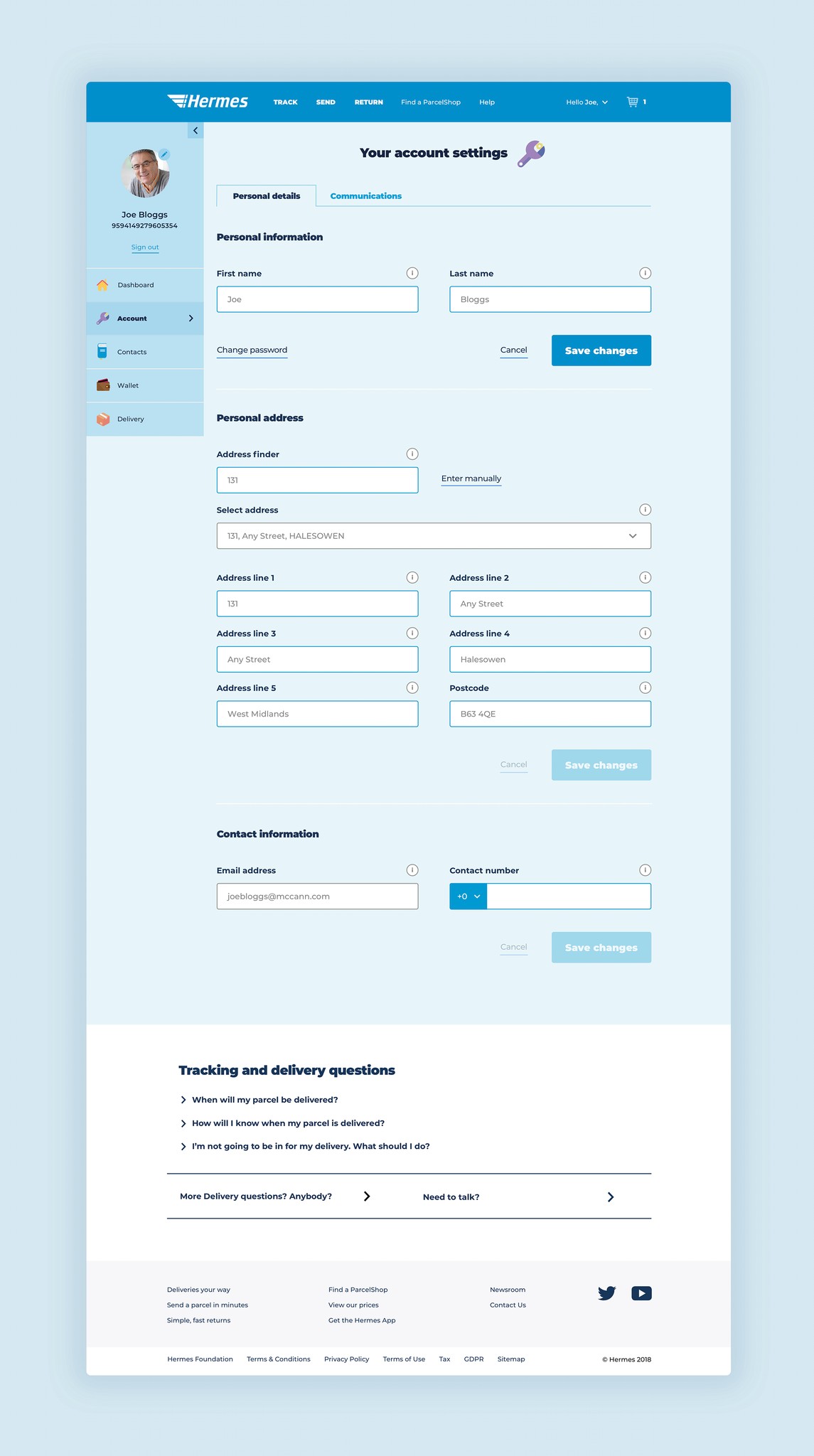
Account - Personal details and addresses
Contacts - Sender and recipient info
Wallet - Payment methods and credits
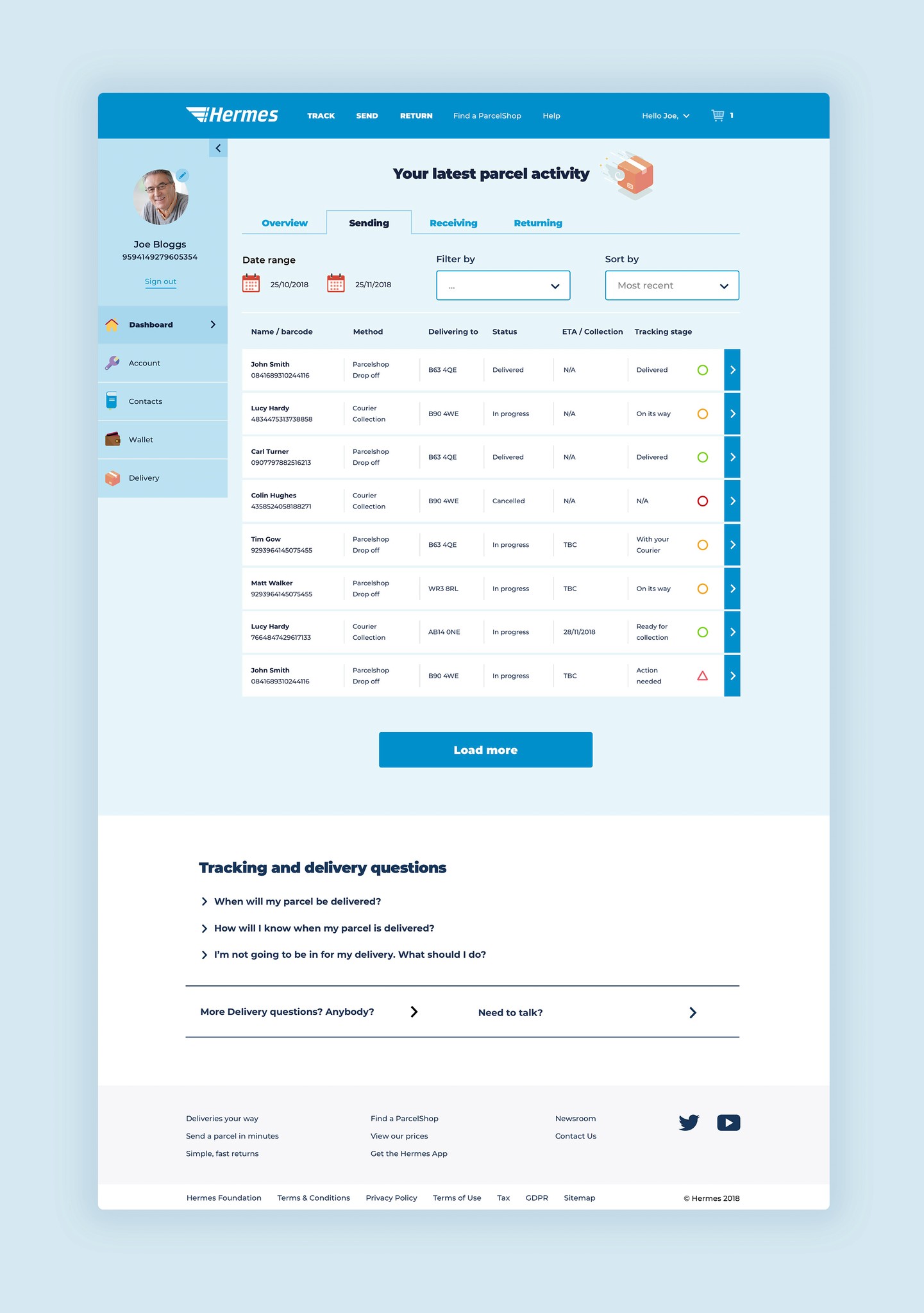
Delivery - Active and past parcels
The Solution
To give users a single source of truth, I designed a unified account hub bringing together delivery tracking, personal details, addresses, contacts, payment tools, and preferences. The hub is organised into five subsections based on the key task groups that emerged from the discovery phase:
Dashboard - Overview and quick actions
Account - Personal details and addresses
Contacts - Sender and recipient info
Wallet - Payment methods and credits
Delivery - Active and past parcels
The Solution
Focusing on a single source of truth, I designed a unified account hub that brings together delivery tracking, personal details, addresses, contacts, wallet tools, and preferences, organised into five subsections:
Dashboard
Overview and quick actionsAccount
Personal details and addressesContacts
Sender and recipient infoWallet
Payment methods and creditsDelivery
Active and past parcels
The Solution
To give users a single source of truth, I designed a unified account hub bringing together delivery tracking, personal details, addresses, contacts, payment tools, and preferences. The hub is organised into five subsections based on the key task groups that emerged from the discovery phase:
Dashboard - Overview and quick actions
Account - Personal details and addresses
Contacts - Sender and recipient info
Wallet - Payment methods and credits
Delivery - Active and past parcels
Design Rationale
Users want all info in one place rather than scattered across the site. The five sections map directly specific task types such as knowing where something is, managing who it's for, and controlling how it's paid for. Simplifying the delivery status model improved clarity and reduced support contact, while making addresses editable removed one of the most common support drivers entirely.
Design Rationale
Users want all info in one place rather than scattered across the site. The five sections map directly specific task types such as knowing where something is, managing who it's for, and controlling how it's paid for. Simplifying the delivery status model improved clarity and reduced support contact, while making addresses editable removed one of the most common support drivers entirely.
Design Rationale
Users want all info in one place rather than scattered across the site. The five sections map directly specific task types such as knowing where something is, managing who it's for, and controlling how it's paid for. Simplifying the delivery status model improved clarity and reduced support contact, while making addresses editable removed one of the most common support drivers entirely.
Design Rationale
Users want all info in one place rather than scattered across the site. The five sections map directly specific task types such as knowing where something is, managing who it's for, and controlling how it's paid for. Simplifying the delivery status model improved clarity and reduced support contact, while making addresses editable removed one of the most common support drivers entirely.

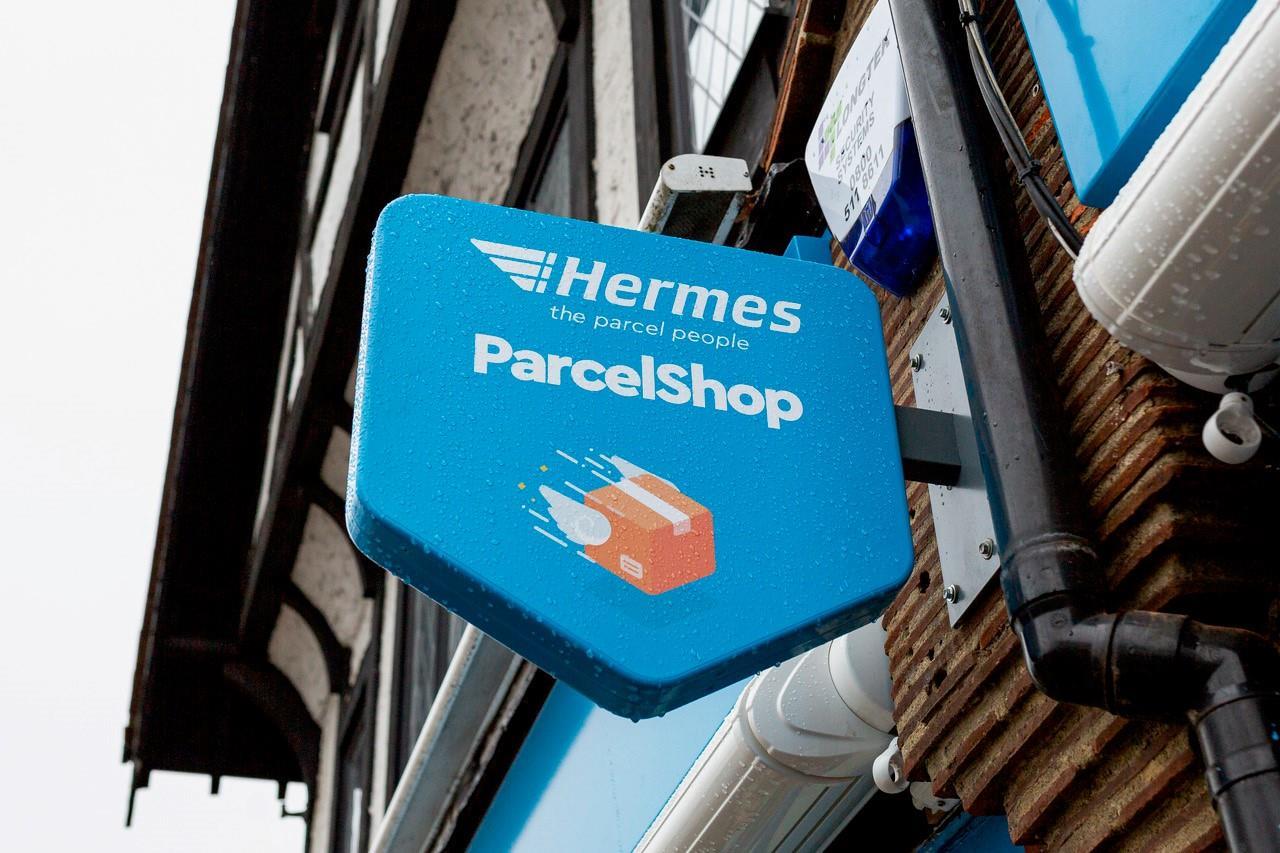
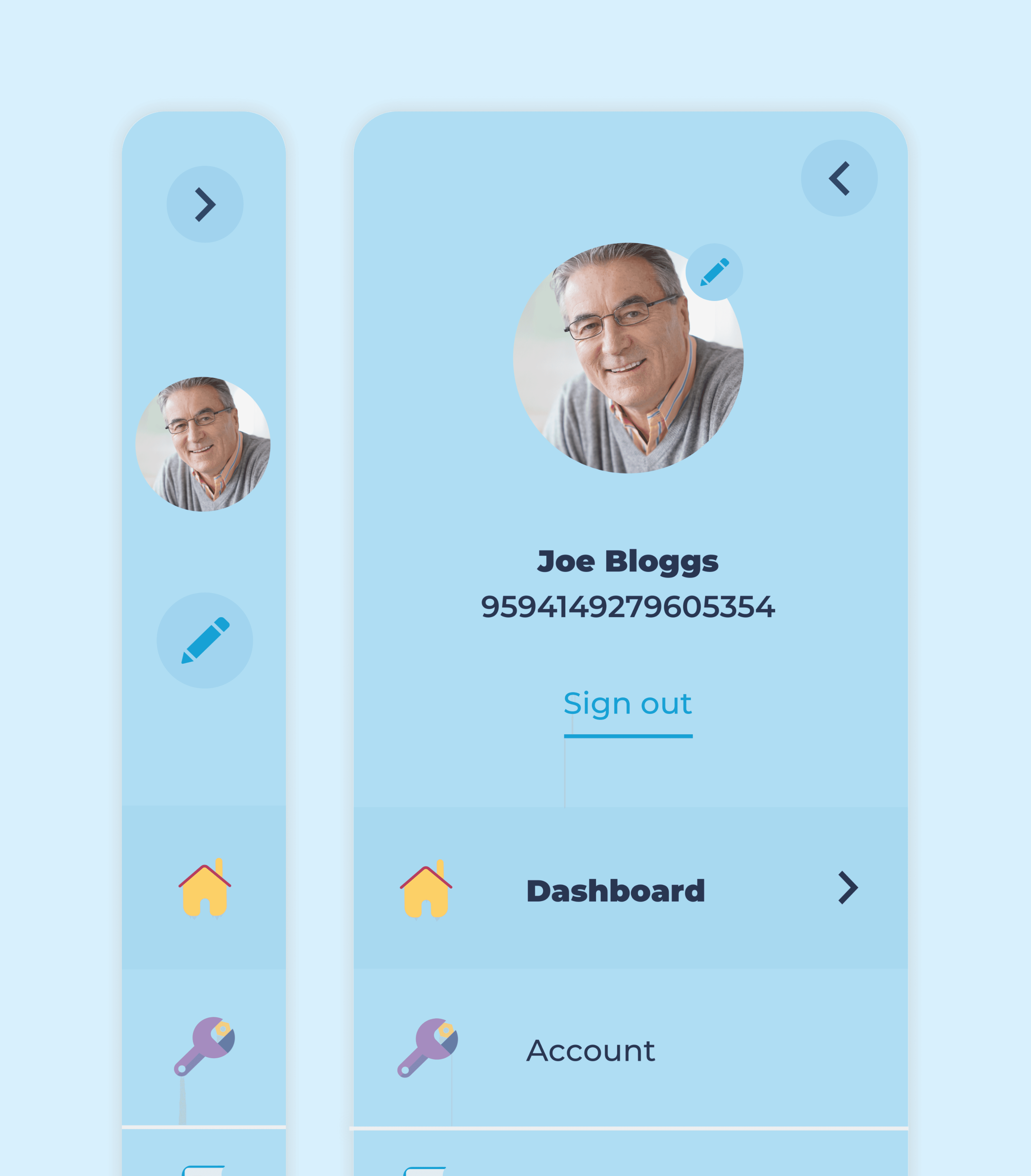
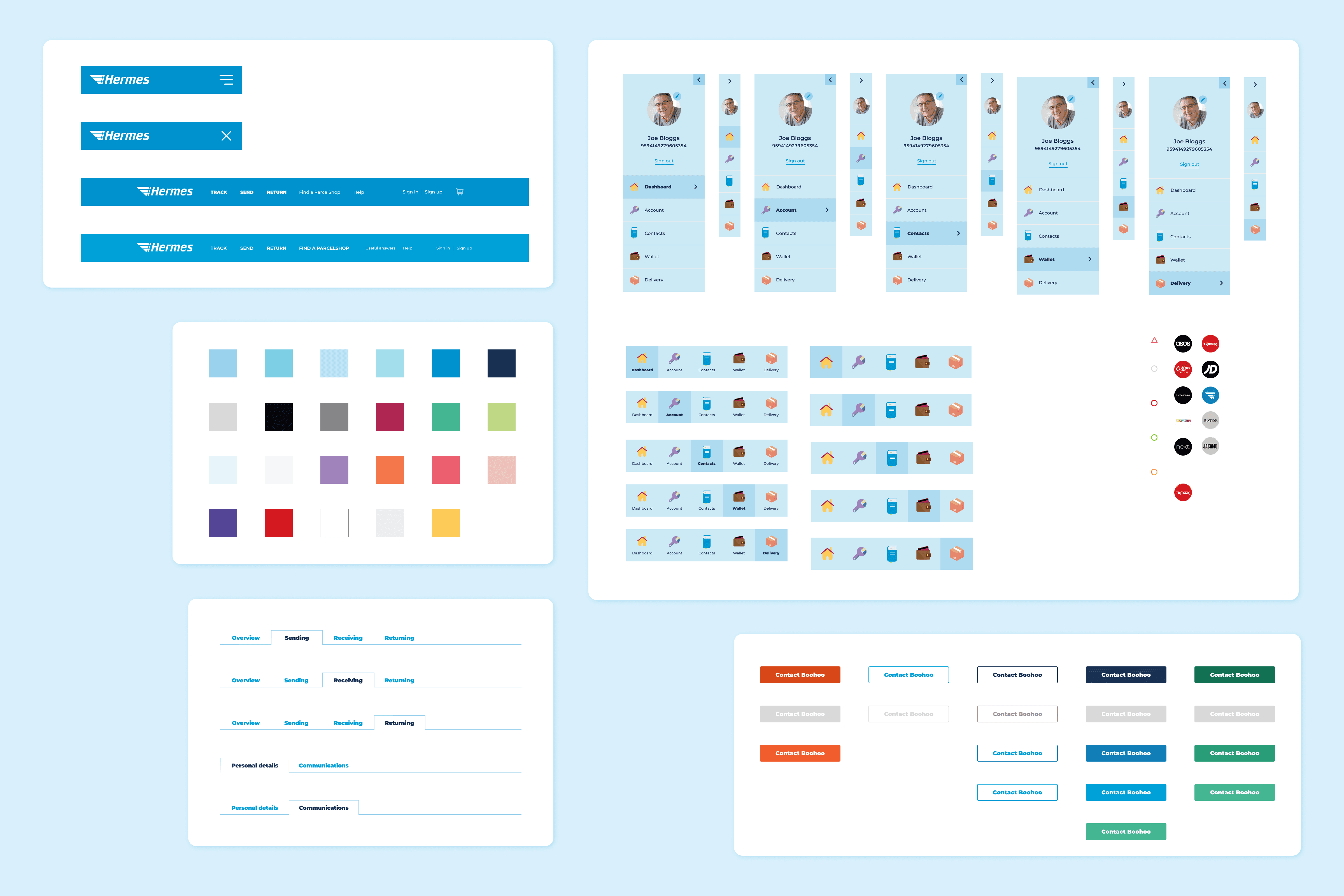
Custom illustrations, animations, and a collapsible sidebar to boost clarity and brand personality.
Custom illustrations, animations, and a collapsible sidebar to boost clarity and brand personality.
Custom illustrations, animations, and a collapsible sidebar to boost clarity and brand personality.
Custom illustrations, animations, and a collapsible sidebar to boost clarity and brand personality.
UI, Interactions & Messaging
Specifically on mobile, the focus was reducing friction at every step therefore postcode-first address lookup, larger tap targets, shorter scroll paths, and more reassuring language throughout was necessary. Delivery timelines were simplified with plain language and safe mid-delivery edit options built in. A robust design system underpins the changes, keeping the experience consistent.
UI, Interactions & Messaging
Specifically on mobile, the focus was reducing friction at every step therefore postcode-first address lookup, larger tap targets, shorter scroll paths, and more reassuring language throughout was necessary. Delivery timelines were simplified with plain language and safe mid-delivery edit options built in. A robust design system underpins the changes, keeping the experience consistent.
UI, Interactions & Messaging
Specifically on mobile, the focus was reducing friction at every step therefore postcode-first address lookup, larger tap targets, shorter scroll paths, and more reassuring language throughout was necessary. Delivery timelines were simplified with plain language and safe mid-delivery edit options built in. A robust design system underpins the changes, keeping the experience consistent.
UI, Interactions & Messaging
Specifically on mobile, the focus was reducing friction at every step therefore postcode-first address lookup, larger tap targets, shorter scroll paths, and more reassuring language throughout was necessary. Delivery timelines were simplified with plain language and safe mid-delivery edit options built in. A robust design system underpins the changes, keeping the experience consistent.
Trade Offs & Constraints
Deprioritised delivery archives and detailed payment history in favour of primary account tasks.
Scoped to IA, status models, and component improvements that could ship within a legacy CMS.
Trade Offs & Constraints
Deprioritised delivery archives and detailed payment history in favour of primary account tasks.
Scoped to IA, status models, and component improvements that could ship within a legacy CMS.
Trade Offs & Constraints
Deprioritised delivery archives and detailed payment history in favour of primary account tasks.
Scoped to IA, status models, and component improvements that could ship within a legacy CMS.
Trade Offs & Constraints
Deprioritised delivery archives and detailed payment history in favour of primary account tasks.
Scoped to IA, status models, and component improvements that could ship within a legacy CMS.
Trade Offs & Constraints
Deprioritised delivery archives and detailed payment history in favour of primary account tasks.
Scoped to IA, status models, and component improvements that could ship within a legacy CMS.
Desktop animation showcasing a key user flow and smooth step-to-step transitions.
Desktop animation showcasing a key user flow and smooth step-to-step transitions.
Desktop animation showcasing a key user flow and smooth step-to-step transitions.
Desktop animation showcasing a key user flow and smooth step-to-step transitions.
Continuous Improvements
Working in agile sprints with a user researcher and product owner, I combined usability testing, analytics, support tickets, and a UX scorecard to drive an ongoing feedback loop, not a one-off redesign.
Main iterations:
Navigation hierarchy based on observed way finding behaviour
Notification timing validated through delivery comms testing
Tone of voice refined with copywriter from comprehension feedback
Accessibility gaps identified and addressed during research sessions
Continuous Improvements
Working in agile sprints with a user researcher and product owner, I combined usability testing, analytics, support tickets, and a UX scorecard to drive an ongoing feedback loop, not a one-off redesign.
Main iterations:
Navigation hierarchy based on observed way finding behaviour
Notification timing validated through delivery comms testing
Tone of voice refined with copywriter from comprehension feedback
Accessibility gaps identified and addressed during research sessions
Continuous Improvements
Working in agile sprints with a user researcher and product owner, I combined usability testing, analytics, support tickets, and a UX scorecard to drive an ongoing feedback loop, not a one-off redesign.
Main iterations:
Navigation hierarchy based on observed way finding behaviour
Notification timing validated through delivery comms testing
Tone of voice refined with copywriter from comprehension feedback
Accessibility gaps identified and addressed during research sessions
Continuous Improvements
Working in agile sprints with a user researcher and product owner, I combined usability testing, analytics, support tickets, and a UX scorecard to drive an ongoing feedback loop, not a one-off redesign.
Main iterations:
Navigation hierarchy based on observed way finding behaviour
Notification timing validated through delivery comms testing
Tone of voice refined with copywriter from comprehension feedback
Accessibility gaps identified and addressed during research sessions
Continuous Improvements
Working in agile sprints with a user researcher and product owner, I combined usability testing, analytics, support tickets, and a UX scorecard to drive an ongoing feedback loop, not a one-off redesign.
Main iterations:
Navigation hierarchy based on observed way finding behaviour
Notification timing validated through delivery comms testing
Tone of voice refined with copywriter from comprehension feedback
Accessibility gaps identified and addressed during research sessions
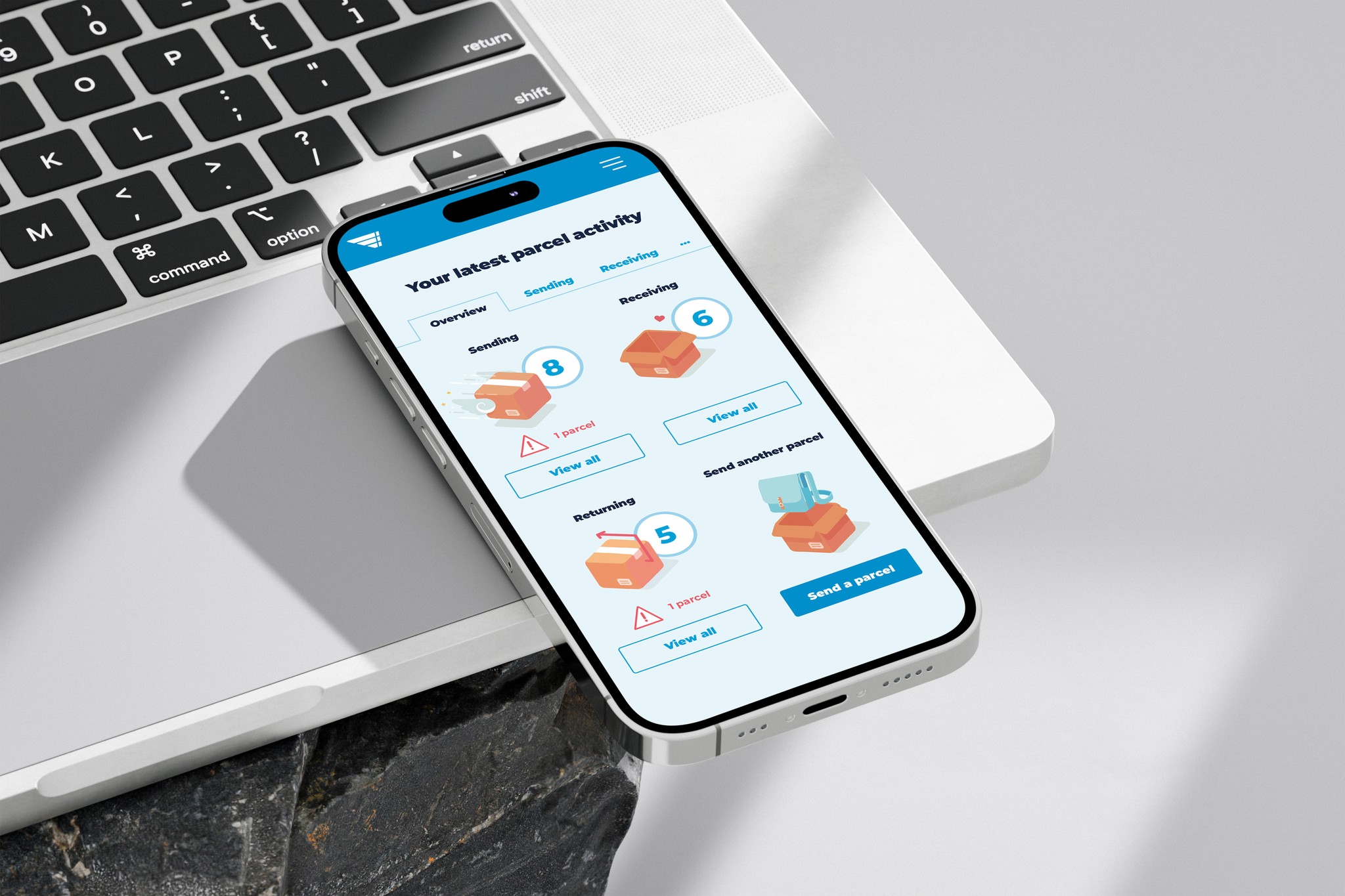
Mobile delivery-status screens with streamlined access to tracking, proof of delivery, and parcel history.
Mobile delivery-status screens with streamlined access to tracking, proof of delivery, and parcel history.
Mobile delivery-status screens with streamlined access to tracking, proof of delivery, and parcel history.
Mobile delivery-status screens with streamlined access to tracking, proof of delivery, and parcel history.
Impact
21% fewer support queries
32% increase in task completions
38% faster mobile task completion
Impact
21% fewer support queries
32% increase in task completions
38% faster mobile task completion
Impact
21% fewer support queries
32% increase in task completions
38% faster mobile task completion
Impact
21% fewer support queries
32% increase in task completions
38% faster mobile task completion
What I learned
This project reinforced that account management is not a static settings page. It is the foundation for customer trust during uncertain delivery moments.
Building a cross‑team shared understanding early made decision‑making faster, and designing with constraints led to pragmatic but impactful solutions. Combining user frameworks with operational scenarios enabled a design that worked both for customers and the business.
Next time, I would embed accessibility and content specialists from day one to further accelerate alignment and reduce rework.
What I learned
This project reinforced that account management is not a static settings page. It is the foundation for customer trust during uncertain delivery moments.
Building a cross‑team shared understanding early made decision‑making faster, and designing with constraints led to pragmatic but impactful solutions. Combining user frameworks with operational scenarios enabled a design that worked both for customers and the business.
Next time, I would embed accessibility and content specialists from day one to further accelerate alignment and reduce rework.
What I learned
This project reinforced that account management is not a static settings page. It is the foundation for customer trust during uncertain delivery moments.
Building a cross‑team shared understanding early made decision‑making faster, and designing with constraints led to pragmatic but impactful solutions. Combining user frameworks with operational scenarios enabled a design that worked both for customers and the business.
Next time, I would embed accessibility and content specialists from day one to further accelerate alignment and reduce rework.
What I learned
This project reinforced that account management is not a static settings page. It is the foundation for customer trust during uncertain delivery moments.
Building a cross‑team shared understanding early made decision‑making faster, and designing with constraints led to pragmatic but impactful solutions. Combining user frameworks with operational scenarios enabled a design that worked both for customers and the business.
Next time, I would embed accessibility and content specialists from day one to further accelerate alignment and reduce rework.
Key Impact
📉 21% fewer support queries
✅ 32% increase in task completions
⚡ 38% faster mobile task competition
Key Impact
📉 21% fewer support queries
✅ 32% increase in task completions
⚡ 38% faster mobile task competition
Key Impact
📉 21% fewer support queries
✅ 32% increase in task completions
⚡ 38% faster mobile task competition
Key Impact
📉 21% fewer support queries
✅ 32% increase in task completions
⚡ 38% faster mobile task competition
Key Impact
📉 21% fewer support queries
✅ 32% increase in task completions
⚡ 38% faster mobile task competition